
Data Science @ Uni Vienna Seed Grants
Call for Submissions 2025
The Research Network Data Science @ Uni Vienna invites applications for seed grants to support innovative, collaborative, and interdisciplinary research in Data Science. These grants are designed to help early-career scholars (up to 7 years post-PhD, taking career breaks into account) prepare competitive proposals for major funding opportunities and to support collaboration across faculties within the network.
Purpose:
The seed grants are intended to support the preparation of major funding applications (e.g. ERC Frontier Research Grants, FWF Principal Investigator Projects, FWF START, Elise Richter, or similar). Projects must be relevant to the domain of Data Science, and resulting applications must be submitted through one of the faculties affiliated with the research network. Grant recipients are expected to present their projects and any preliminary results at one of our networking events. The timeline for the submission of the major funding application must be within one year.
Eligibility:
- Eligible Candidates: Early-career researchers (advanced doctoral candidates, postdoctoral fellows, and assistant professors) at the University of Vienna who are affiliated with the Research Network Data Science @ Uni Vienna at the time of application and are expected to maintain their affiliation for at least 12 months.
- Membership: For information on joining the network, please refer to the membership guidelines of the Research Network Data Science @ Uni Vienna.
- Research Focus: Proposed projects must align with the domain of Data Science and be hosted within a faculty of the University of Vienna affiliated with the research network. Preference will be given to proposals that promote interdisciplinary collaborations across multiple faculties.
- Funding Amount: € 1,000 – € 5,000
- Eligible Expenses: Covered costs may include research software or data acquisition, travel and accommodation for workshops whose purpose is proposal development, or external contracts for project-related tasks. While this list is not exhaustive, all expenses must be clearly justified in relation to the objectives of the grant.
Evaluation Criteria:
- Purpose: How clear is it that the seed funding will be used for the preparation of an application for a major (ideally collaborative) grant – e.g. FWF Principal Investigator Project, START grant, ERC grant, WWTF, etc. – on a topic and in a faculty?
- Quality of idea: How clear is the idea in terms of its relevance, objectives, description of the state of the art, objectives, and methods? Is the benefit of the short proposal for the larger one clearly explained?
- Budget and timeline: How plausible, reasonable, and well-justified is the budget? Is the timeline clearly explained and feasible?
- Feasibility: Is the larger programme targeted by the applicant likely to be a good fit for the proposed project, and are the activities described in the grant application likely to improve the chances of its success?
Application Process:
Applications should be submitted via e-mail to info.datascience@univie.ac.at as a single PDF file, which must include the following documents:
- Cover letter (max 1 page)
- CV of the applicant (max 1 page)
- Detailed budget with explanations of expected costs (max 1 page)
- Project description of two pages with the following topics:
- Project summary, including the host faculty and any collaborators
- Name of an independent expert who can be consulted on the project topic if necessary
- Details of the funding scheme for the full application including an explanation of how the seed grant supports the application of a follow up application
- Timeline for submitting the full application, outlining any events funded by the seed grant
For any questions or further information, feel free to contact us at info.datascience@univie.ac.at
Application Deadline:
Sunday, 7 September 2025
We are happy to announce Seed Grants Winners of 2025:
Paul Hager
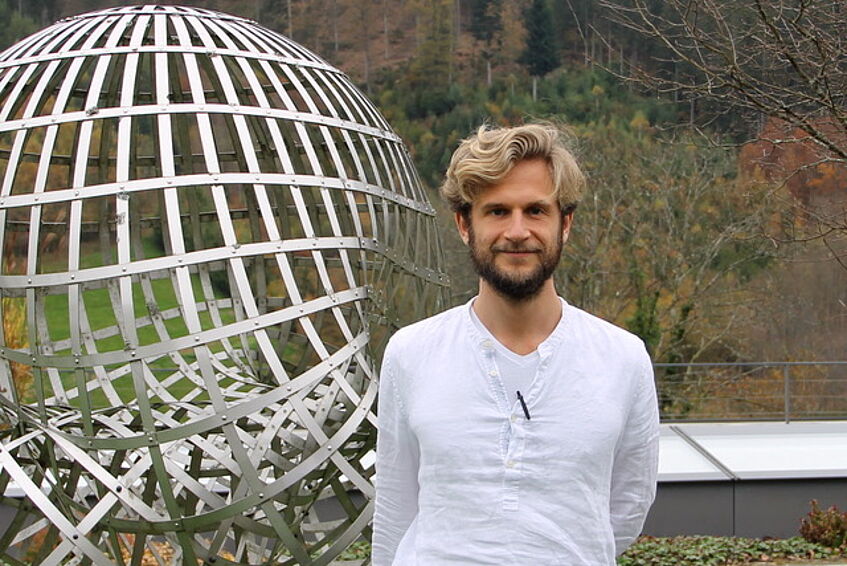
Paul Hager
Project: Fast Robust Control for Data Streams with Memory
We increasingly face high-frequency time series data: streams of observations arriving rapidly, often irregularly, and strongly shaped by past behavior. Finance is a prime example. Modern markets are driven by high-frequency and algorithmic trading and by fragmented, decentralized venues, creating new challenges for pricing and hedging financial risk and for calibrating models to data. A central difficulty is that market dynamics have memory: what happens next depends not only on the current price, but also on the recent history of trading activity, volatility, and order flow. Many machine-learning approaches tackle this with large "black-box" models trained end-to-end. While powerful, such models can be hard to interpret, fragile on irregular data (as in limit-order books), and offer limited analytical insight.
A structured alternative is based on ideas from modern mathematics known as rough path theory. Its central practical tool is the signature of a time series: a compact set of features that summarizes the information contained in the full history of the series. Signatures are stable when data are observed at different time resolutions and are expressive enough to represent a wide range of path-dependent effects.
This project initiates research at the intersection of reinforcement learning and signature-based, non-Markovian control: how to learn robust, fast decision rules when actions must react to rapidly arriving market data with strong memory effects. Reinforcement learning is increasingly important for sequential decision-making under uncertainty, but most standard methods rely on simplified "state" descriptions that break down when the past matters. By using signatures to encode relevant history in a stable and compact way, the project aims to make learning-based control both more reliable and more transparent in high-frequency settings.
Carolina Atria and Pascal Weber

Carolina Atria and Pascal Weber
Project: Inferring Gene Regulatory Networks from Single-Cell Multiomics Data
Our project aims to infer gene regulatory networks underlying cellular differentiation in single-cell multiomics data. Focusing on the marine sponge Suberites domuncula, we combine single-cell RNA sequencing (scRNA-seq) and chromatin accessibility (ATAC-seq) data to identify transcription factors and regulatory interactions at single-cell resolution.
Non-model species represent the vast majority of biodiversity but remain largely understudied due to methodological limitations; this project addresses that gap by developing and applying advanced data mining and machine learning approaches tailored to sparse, noisy, and high-dimensional biological data.
Our project is a collaboration between the Data Mining and Machine Learning group and the Department of Neurobiology and Developmental Biology at the University of Vienna. It serves as a proof-of-concept for multimodal GRN inference in non-model organisms and lays the groundwork for comparative, cross-species analyses in future large-scale funding applications.
Leopold Zehetner
Leopold Zehetner
Project: Data-Driven Strain Engineering for Improved and Cost-Efcient CAR–T Virus Manufacturing
CAR-T cell therapy has transformed cancer treatment by using a patient's own immune cells to fight malignant tumors. However, the therapy remains prohibitively expensive—costing between €50,000 and €450,000 per patient. A major cost driver is the production of retroviral vectors, the specialized "delivery vehicles" that insert therapeutic genes into T cells. Current production costs can reach €100,000 per batch, limiting access to these life-saving treatments worldwide. This seed project addresses this challenge by improving retroviral vector production through genetic optimization of the murine cell lines used in manufacturing. Over decades of cultivation, these cell lines accumulate genetic changes that can reduce production efficiency. By understanding and correcting these genetic variations, we can significantly boost viral yields and reduce manufacturing costs. The project focuses on two key cell lines essential for retroviral vector production: NIH-3T3 and PG13. We will generate high-quality genome sequences for both cell lines using cutting-edge sequencing technology, map genetic variations and identify areas of instability that limit production efficiency, update computational models of cellular metabolism to pinpoint metabolic bottlenecks, and develop preliminary hypotheses about how to optimize these cells for better viral production. These foundational results will provide essential proof-of-concept for a larger follow-up research proposal aimed at implementing targeted genetic engineering strategies. Even independently, the genomic data and computational models will become valuable resources for the biotechnology community, advancing CAR-T manufacturing globally. Ultimately, this work aims to reduce costs and expand patient access to transformative cancer therapies.
We are happy to announce Seed Grants Winners of 2024:
Susanna Sawyer and Jory Lietard
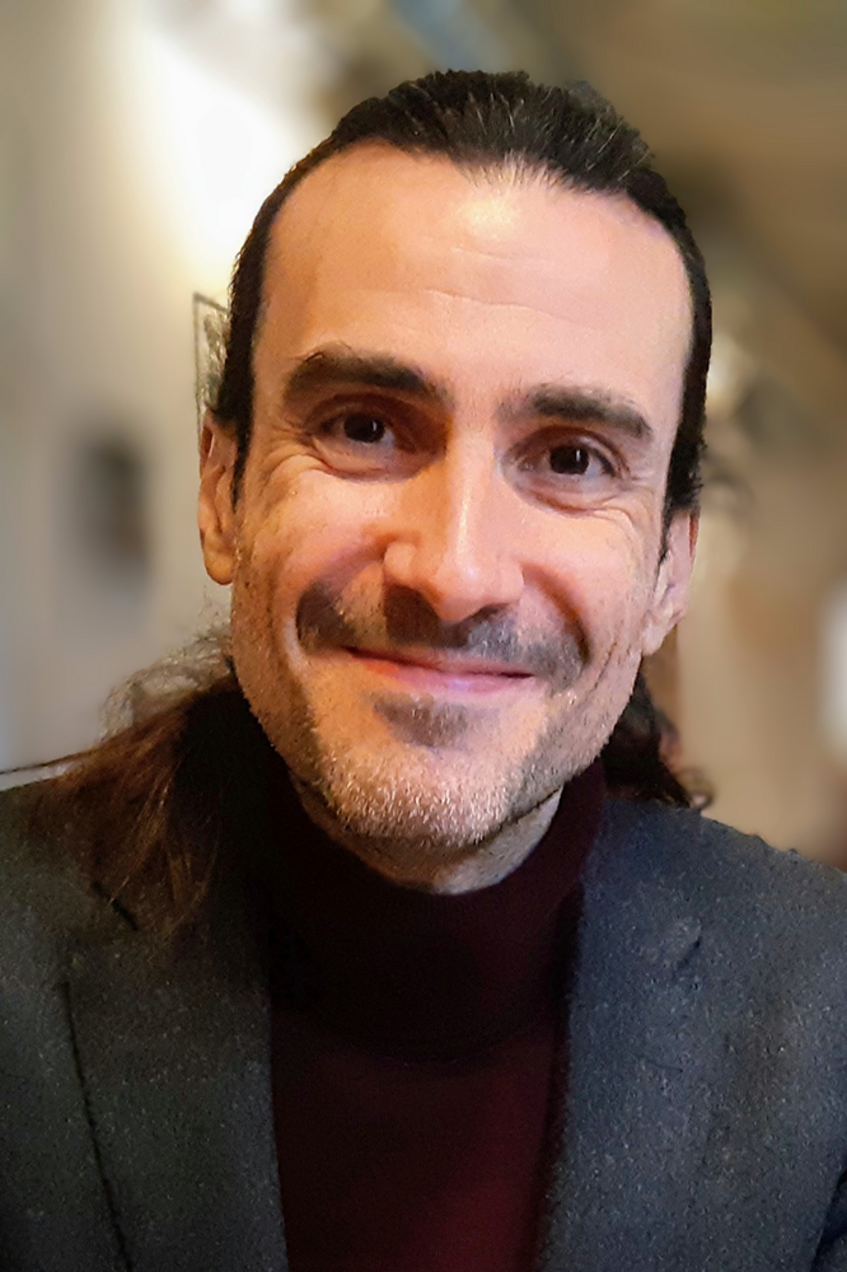
Susanna Sawyer—postdoctoral researcher at the Department of Evolutionary Anthropology—and Jory Lietard—Assistant Professor at the Institute of Inorganic Chemistry—plan to investigate alternative sequencing strategies for ancient DNA using Oxford Nanopore Technology. Their project will be the first step in this plan by producing data to train a new basecaller for degraded ancient DNA.
Andreas Baumann and Yllka Velaj
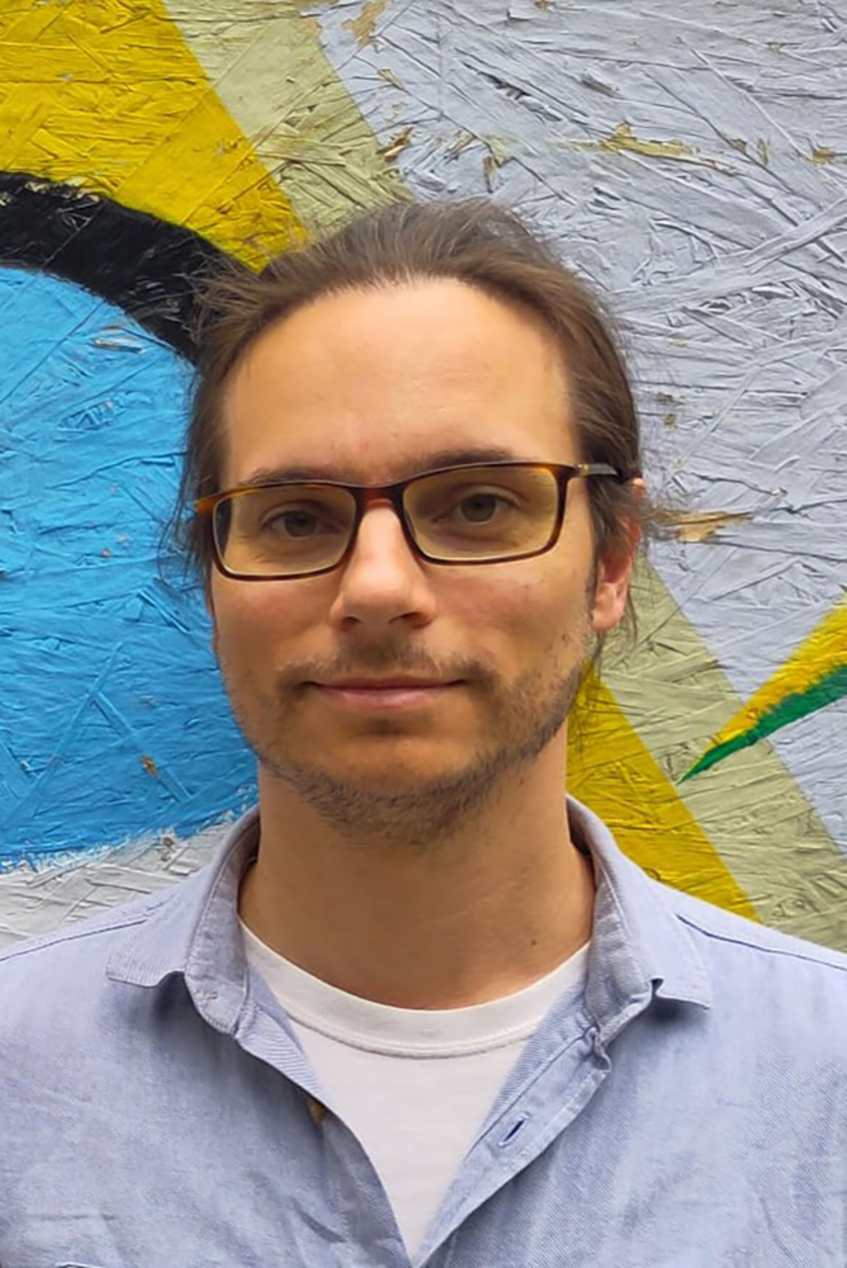
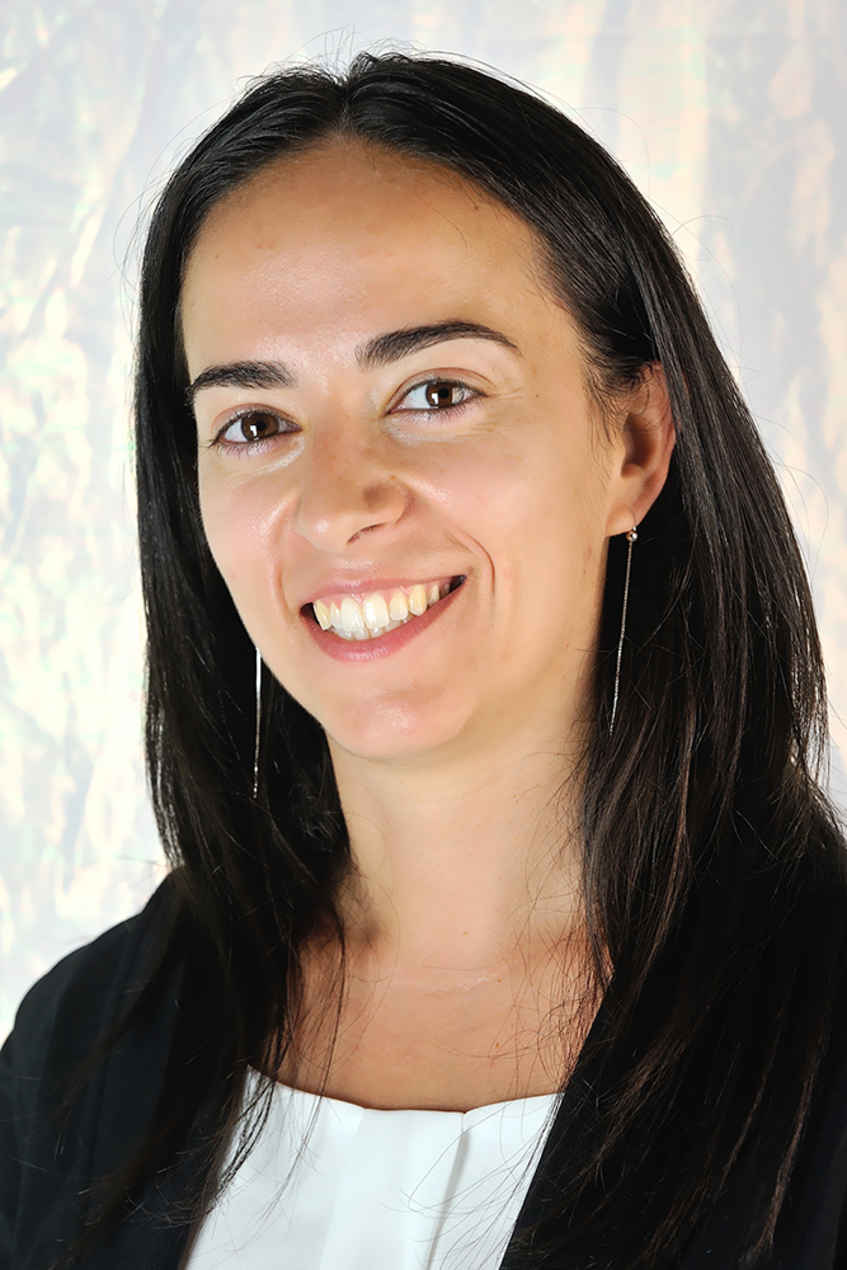
Languages and the words that we use to communicate are subject to change. In their project, Andreas Baumann—Assistant Professor at the Department of German Studies— and Yllka Velaj—Assistant Professor at the Faculty of Computer Science—plan to investigate how words spread through speaker populations via digital and in-person interactions by combining data and methods from demographics, epidemiology, social media, and network science.